



How to Choose the Right Laboratory Balance? Analytical, Semi-Micro, Precision and Industrial Balances Explained
Selecting the right balance is a critical step in ensuring reliable, efficient, and compliant weighing processes. Whether you work in quality control, research, manufacturing or logistics, choosing a balance with the appropriate readability and capacity will improve both measurement accuracy and workflow efficiency.
This guide explains the differences between analytical, semi-micro, precision, and industrial balances, helping you identify the best solution for your application.
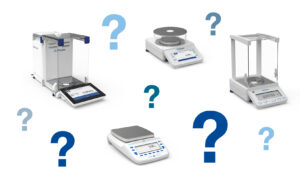
Why Choosing the Right Balance Matters
Many users assume that higher readability automatically results in better weighing performance. In reality, selecting a balance with excessive resolution can increase costs and make the weighing process more sensitive to environmental influences.
The best balance is the one that matches your application requirements, weighing range, and desired measurement uncertainty.
Analytical Balances: The Laboratory Standard
Analytical balances are among the most widely used instruments in laboratories. They offer an excellent combination of accuracy, ease of use, and efficiency.
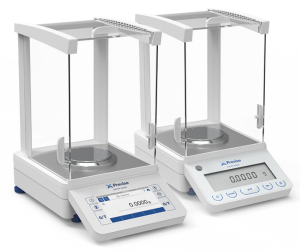
Typical characteristics:
- Readability of 0.1 mg
- Draft shield for protection against air currents
- Suitable for routine laboratory work
- Excellent balance between precision and productivity
Typical applications:
- Quality control
- Sample preparation
- Formulation and recipe preparation
- Educational and research laboratories
For many laboratory applications, an analytical balance provides all the precision required while maintaining efficient workflows.
Semi-Micro Balances: When Higher Precision Is Required
Semi-micro balances offer ten times higher readability than standard analytical balances and are designed for applications where small sample quantities or increased measurement accuracy are critical.
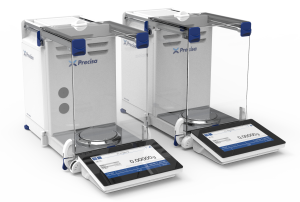
Typical characteristics:
- Readability of 0.01 mg (10 µg)
- Higher sensitivity than analytical balances
- Ideal for demanding laboratory applications
Typical applications:
- Pharmaceutical analysis
- Method development
- Research and development
- Preparation of reference standards
When analytical balances reach their limits, semi-micro balances provide the additional precision needed for highly demanding tasks.
Precision Balances: Flexibility for Everyday Weighing
Precision balances are designed for applications that require larger capacities while still maintaining high accuracy.
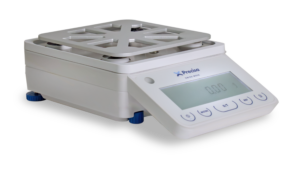
Typical characteristics:
- Readability ranging from 0.001 g to 0.1 g
- Higher capacities than analytical balances
- Fast stabilization times
- Versatile operation
Typical applications:
- Production environments
- Incoming goods inspection
- Piece counting
- General laboratory weighing
Precision balances are often the ideal choice when weighing larger quantities that do not require analytical-level resolution.
Industrial Balances and Scales: Built for Higher Loads
Industrial balances and scales are optimized for heavy-duty weighing applications where durability, capacity, and reliability are the primary requirements.

Typical characteristics:
- High weighing capacities
- Robust industrial construction
- Resistant to harsh operating environments
- Various platform sizes available
Typical applications:
- Manufacturing processes
- Logistics and warehousing
- Packaging operations
- Bulk material handling
Industrial balances deliver reliable performance in environments where laboratory balances would not be practical.
How Much Readability Do You Really Need?
Choosing the right balance starts with understanding your application requirements.
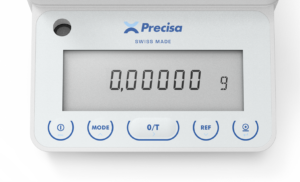
As a general guideline:
- Semi-micro balance (0.01 mg): For highly demanding laboratory applications and small sample quantities
- Analytical balance (0.1 mg): For most laboratory and quality control applications
- Precision balance (0.001 – 0.1 g): For larger sample quantities where analytical precision is not required
- Industrial balance: For high-capacity weighing tasks in production and logistics
The goal should always be to select the balance that delivers the required performance without unnecessary complexity.
Environmental Considerations
As readability increases, balances become more sensitive to environmental influences such as:
- Air drafts
- Temperature fluctuations
- Vibrations
- Electrostatic charges
- Operator handling
For this reason, semi-micro and analytical balances typically require more controlled environments than precision or industrial balances.
Questions to Ask Before Selecting a Balance
Before making a decision, consider the following:
- What is the smallest sample you need to weigh?
- What level of accuracy is required?
- What maximum capacity do you need?
- Will the balance be used in a laboratory or industrial environment?
- How frequently will the balance be used?
- Are there regulatory requirements such as GLP, GMP, or CFR 21 pt. 11 compliance support?
Conclusion
The right balance depends on your specific weighing requirements. Analytical balances provide the ideal solution for most laboratory tasks, while semi-micro balances offer additional precision for demanding applications. Precision balances combine flexibility with higher capacities, and industrial balances deliver reliable performance for production and logistics environments.
By understanding your application, weighing range, and accuracy requirements, you can select a balance that improves efficiency, ensures reliable results, and supports long-term process quality.