



Precision Microforce Measurement with the Precisa 520 PT in Silk Fiber Research

Regenerated silk fibers are emerging as promising building blocks for tissue engineering because they combine biocompatibility, mechanical performance, and the ability to carry bioactive molecules.
In the European THOR project, researchers investigated regenerated silk fibers produced by Dynamic Dope Destabilization Spinning (D3S) for use in vascularized tissue scaffolds. A central part of the study was the mechanical characterization of fibers with diameters of approximately 20 μm under different conditions, including dry, hydrated, and wet-stretched states.
For these tensile measurements, the researchers combined an Instron 4411 testing machine with a Precisa 520 PT 220A balance, which measured the force applied to the fibers with a reported resolution of 1 μN.
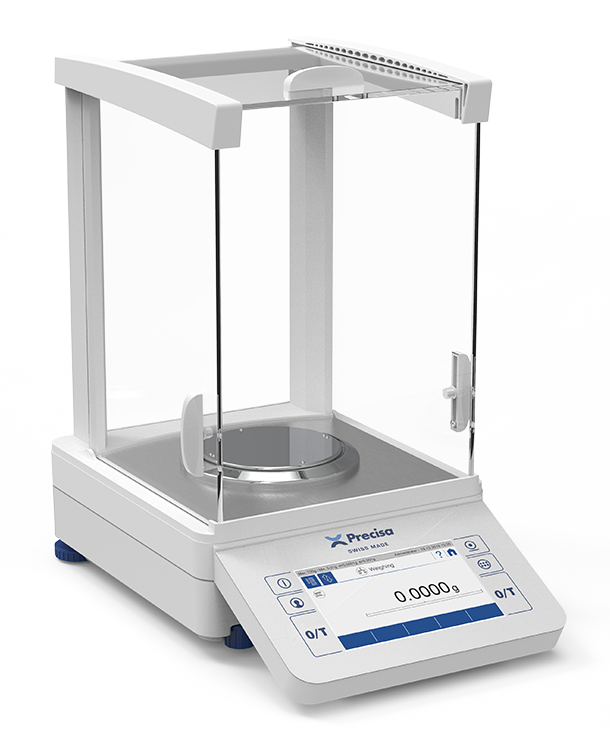
This high force resolution was essential because the mechanical response of such thin biomaterial fibers involves very small forces that must be detected reliably. The measurements showed that wet-stretched regenerated silk fibers could reach tensile strengths of around 120 MPa and a work to fracture of approximately 30 MJ/m³.
The Precisa 520 PT balance was also used in a second key experiment: measuring the self-adhesion force between two regenerated silk fibers. In hydrated conditions, the researchers observed a detachment force of about 16 mN, corresponding to an estimated adhesion stress of roughly 40 MPa.
This capability to resolve both tensile and adhesion forces makes the Series 520 balance particularly valuable for microforce measurement, biomaterials testing, fiber mechanics, and tissue-engineering research.
Its role in the study demonstrates how a precision balance can function not only as a weighing instrument, but also as a sensitive force-measurement component within a custom mechanical test setup.
Similar applications could include tensile testing of microfibers, sutures, polymer filaments, biological threads, or other small-diameter materials where low-force resolution is critical.
The same measurement principle could also support adhesion and detachment studies involving hydrogels, coated fibers, biofunctional surfaces, membranes, or cell-compatible scaffold materials.
For R&D laboratories, these applications are especially relevant when standard mechanical test systems require additional sensitivity in the micro- to millinewton range. The THOR study therefore provides a strong scientific example of how the Precisa 520 PT analytical balance can support advanced mechanical characterization of next-generation biomaterials.
Learn More
Discover how the Precisa 520 PT can support your research and testing applications.
👉 Contact our experts for technical guidance or explore the product page to learn more about its microforce measurement capabilities.
References
Pérez-Rigueiro, J., Guedán-Durán, A., Panetsos, F., Arencibia, G., Guinea, G. V., Colchero, L., Quero, M., Espinosa, J., Rizzi, A., Maduna, T., Pancho, A., Hakani, M., Vlachos, A., Sepúlveda-Díaz, J., Morin, A., Papa, M., Cirillo, G., Virtuoso, A., & De Luca, C. (2026). High-Performance Regenerated Silk Fibers as Building Blocks of Tissue Scaffolds: The European THOR Project. Biomimetics, 11, 566.
https://doi.org/10.3390/biomimetics11080566