



Typical Applications of Thermogravimetric Analysis (TGA)
What Is Thermogravimetric Analysis?
Thermogravimetric analysis (TGA) is an analytical technique used to investigate the thermal behaviour and composition of materials by measuring changes in sample mass under defined temperature conditions. In conventional TGA, mass changes are typically recorded during a continuous temperature programme, whereas macro-thermogravimetric analysis (macro-TGA) generally involves measurements at several defined isothermal temperature steps.
Key parameters commonly determined using macro TGA include moisture content, dry matter, volatile matter, ash content, and loss on ignition (LOI). Consequently, TGA is widely used for material characterisation, quality control, and process optimisation in various industrial and research applications.
How Does TGA Work?
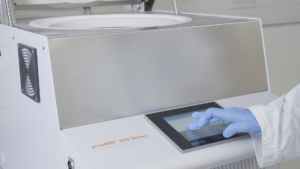
An analysis starts with entering the sample list (up to 29 samples can be measured simultaneously) and selecting the method, which includes the temperature program, the termination criterion, and the calculation of results. After weighing, the analysis is performed fully automatically. The sample is heated according to a predefined temperature program while the instrument continuously records its mass. Typically, moisture content is determined in the first step, followed by ramping up to the ash fusion temperature and the ashing. In the proximate analysis of coal, moisture, volatiles, fixed carbon, and ash are even determined with a single weighing. An other example example, a polymer sample may first lose absorbed moisture, then undergo thermal decomposition before leaving behind inorganic fillers or reinforcing fibers that can be quantified as a final residue.
Typical Applications Across Industry and Research
Pharmaceutical Industry

In pharmaceutical laboratories, the determination of sulfated ash remains one of the most important applications of thermogravimetric analysis. Sulfated ash testing is used to quantify inorganic impurities and residues in active pharmaceutical ingredients (APIs), excipients, and finished products in accordance with pharmacopeial requirements. Automated systems help laboratories improve reproducibility while reducing manual handling and operator workload.
Chemical Industry

Chemical manufacturers use macro TGA systems for routine quality control of raw materials, intermediates, and finished products. Common applications include the determination of moisture content, ash content, and residue after ignition in chemicals, pigments, fertilizers, detergents, and industrial minerals. Automated analysis ensures consistent testing procedures and supports regulatory compliance across production environments.
Food Industry
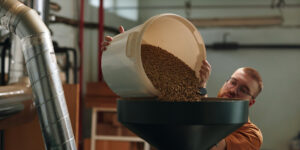
Moisture and ash content are critical quality parameters in food production. Thermogravimetric analysis is used to determine moisture levels in ingredients and finished products, while ash analysis provides information about mineral content and product consistency. Typical applications include flour, cereals, dairy products, animal feed, coffee, spices, and processed foods. Automated workflows enable laboratories to handle large sample volumes efficiently.
Coal and Coke Industry

Coal producers, testing laboratories, power plants, and steel manufacturers rely on thermogravimetric methods to determine moisture, ash, and volatile matter (proximate analysis). These parameters are essential for fuel classification, pricing, combustion efficiency, and process optimization. Automated macro TGA systems support standardized testing while significantly increasing sample throughput compared to conventional furnace methods.
Building Materials Industry

Manufacturers of cement, lime, gypsum, ceramics, and other construction materials use thermogravimetric analysis for moisture determination, loss-on-ignition (LOI) testing, and residue analysis. These measurements help verify raw material quality, monitor production processes, and ensure compliance with industry specifications. Automated instruments improve laboratory productivity while delivering highly reproducible results.
From Muffle Furnaces to Fully Automated Systems
Traditionally, thermal residue and ash determinations were performed using muffle furnaces. While these methods remain useful for certain routine tests, they provide only a final result and do not reveal how the material changes throughout the heating process.
Modern thermogravimetric analyzers combine a high-precision balance with a programmable furnace, enabling continuous measurement of mass changes over a wide temperature range. This provides significantly more information about material composition and thermal behavior than conventional furnace methods and it allows automatic endpoint detection.
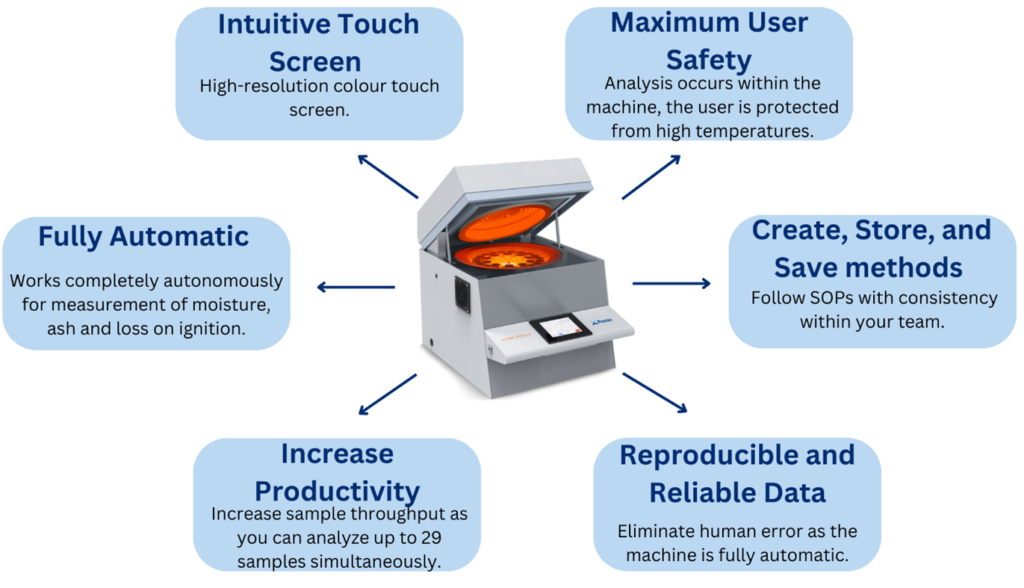
For laboratories with higher throughput requirements, fully integrated and automated systems offer additional advantages. The sequential determination of moisture, volatiles and ash with a single weighing, automatic end-point detection, reweighing, calculation and report generation enables efficient sample processing. Extended unattended operation allow large numbers of samples to be analyzed with minimal operator intervention. These systems help manufacturers and research organizations improve productivity, increase reproducibility, and obtain faster, more reliable analytical results.
Conclusion
Macro Thermogravimetric analysis has become an essential tool for an efficient determination of moisture, ash, loss-on-ignition (LOI) and volatiles. Whether used in food/feeding, soil analysis and recycling applications or in chemical development, for sulfated ash determination in pharmaceutical or proximate analysis in coal and coke, macroTGA delivers the data needed to support both scientific innovation and industrial quality control.
The Precisa Series 340 prepASH combines precise temperature control and an inbuilt analytical balance with automated operation, helping laboratories achieve reliable and reproducible results while reducing manual workload.
Learn more about the Precisa Series 340 prepASH and discover how automated ash determination can improve efficiency and consistency in your laboratory: 👉 Precisa Series 340 prepASH