



Dry Matter and Ash Analysis for Aquaculture | prepASH® | Precisa

Understanding Oyster Growth and Meat Yield
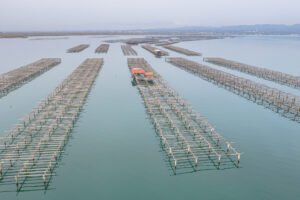
A scientific study by Capelle et al. investigated how stocking density and immersion time affect the growth, survival rate, and meat yield of Pacific oysters in intertidal aquaculture systems. Oysters were cultivated at different biomass levels and under varying immersion conditions to evaluate their impact on production performance. The results showed that lower stocking densities improved individual growth and condition index, while longer immersion times primarily increased meat yield at harvest.
Why Dry Matter and Ash Content Matter
To reliably assess oyster meat yield, researchers determined dry matter, ash content, and ash-free dry mass of the oyster tissue. These parameters provide important information about meat production, biological condition, tissue quality, and overall production performance, making them valuable indicators in aquaculture research and quality control.
Automated Analysis with prepASH®
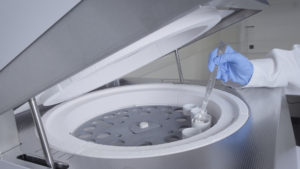
For this analysis, the researchers used prepASH®, an automated macro-TGA system. Oyster meat samples were first dried at 80°C until the change in mass was less than 0.1% within 30 minutes. The samples were then ashed at 540°C using the same stability-based endpoint. Ash-free dry mass was calculated as the difference between dry weight and ash weight.
Unlike conventional methods that rely on predefined treatment times, prepASH® continuously monitors sample weight throughout the drying and ashing process. This gravimetric approach reduces unnecessarily long furnace times, minimizes manual sample handling, and supports highly reproducible results, particularly when processing larger sample batches.
Applications Beyond Oysters
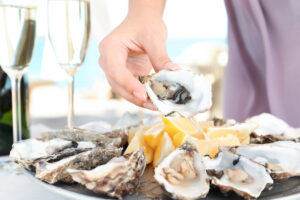
The same analytical approach can be applied to a wide range of aquaculture samples, including mussels, scallops, fish and shrimp feed, algae, aquatic plants, marine sediments, biofilms, and organic residues from aquaculture systems. Laboratories can efficiently determine moisture content, ash content, organic matter, and biological condition across diverse sample types.
Additionally, the technology is well suited for food and feed analysis, including meat products, animal feed, cereal products, and other heterogeneous materials that require accurate moisture and ash determination.
Learn More
Scientific research continues to demonstrate the importance of accurate moisture and ash analysis for evaluating biological materials and product quality. prepASH® provides laboratories with an efficient and reliable solution for automated drying and ashing workflows across aquaculture, food, feed, and environmental applications.
Interested in learning more about prepASH® and its applications?
Visit our contact page and speak with one of our specialists.
👉 Contact us today: www.precisa.com/contact-us
References
Capelle, J. J., Hartog, E., Creemers, J., Heringa, J. & Kamermans, P. (2020): Effects of stocking density and immersion time on the performance of oysters in intertidal off-bottom culture. Aquaculture International, 28, 249–264.